


TINUBU ACTIVATES NEW ARMY FORMATIONS IN FOUR STATES ZAMFARA, KEBBI, OYO, OSUN GET FRESH MILITARY FOOTPRINT AS PRESIDENT PROMISES FASTER RESPONSE TO SECURITY THREATS ABUJA — President Bola Ahmed Tinubu has announced the operationalisation of new Nigerian Army formations in Zamfara, Kebbi, Oyo and Osun States, as the Federal Government intensifies efforts to strengthen the military's presence and response capacity across the country. The President disclosed the development in a statement posted on his official social media handle on Sunday, saying the new formations would position troops closer to communities considered vulnerable to attacks. According to Tinubu, the move is designed to enable soldiers to respond more quickly whenever communities come under threat. “This week, the Nigerian Army operationalised new formations in Zamfara, Kebbi, Oyo and Osun. Our troops are now closer to vulnerable communities in these areas, strengthening our ability to respond swiftly and decisively when our people are threatened.” The President's announcement was reported by Punch, Voice of Nigeria, THISDAY and other Nigerian media organisations. NORTH-WEST, SOUTH-WEST IN FOCUS The development carries particular significance for Zamfara and Kebbi, where communities have continued to face security challenges, including banditry and kidnapping. The inclusion of Oyo and Osun also expands the Army's operational footprint in the South-West, where security agencies continue to contend with kidnapping, criminal networks and other emerging threats. The new formations are expected to complement existing commands and formations by placing military personnel and commanders closer to areas requiring rapid intervention. However, the President's announcement did not disclose the specific names, locations, troop strengths or full operational responsibilities of all the newly operationalised formations. ARMY RESTRUCTURING GATHERS MOMENTUM The latest development comes against the backdrop of a major restructuring of the Nigerian Army approved earlier this year. In July, President Tinubu approved the expansion of the Army's structure from eight to 12 divisions, alongside the recruitment of 28,000 additional personnel. Under the revised structure, new divisional headquarters were announced for Makurdi, Ilorin, Jalingo and Benin City, while existing divisions were assigned revised areas of responsibility. The Army said the restructuring was intended to expand its operational reach, improve command and control and enhance its ability to respond to Nigeria's evolving security challenges. The new structure places Oyo and Osun under 2 Division, Ibadan, while Kebbi and Zamfara remain within the area of responsibility of 8 Division, Sokoto. ZAMFARA GETS MORE TROOPS The latest announcement also follows the Army's recent deployment of additional infantry units to Zamfara. Reports indicate that three new battalions — 12 Infantry Battalion, Bakura; 23 Infantry Battalion, Kaura Namoda; and 28 Infantry Battalion, Anka — were deployed to expand operational coverage in the state. The move is intended to strengthen the Army's presence and improve response capabilities in communities facing persistent security threats. NEW BARRACKS, DEPOTS UNDERWAY President Tinubu also announced that the Federal Government is fast-tracking the construction of new military barracks and depots in Abuja, Ekiti, Ebonyi and Kogi States, while the facility in Osun State has already been completed. The President linked the infrastructure programme to the welfare and effectiveness of military personnel, stressing that government must provide adequate support to soldiers and their families as demands on the Armed Forces increase. Tinubu also referred to the recent increase in military personnel's pay, saying feedback from servicemen and women indicated that the adjustment was making a difference to their families. He stressed that military deployments affect not only the personnel involved but also their families. “Every deployment is a sacrifice made by a family too,” the President said. THE SECURITY CHALLENGE The operationalisation of additional formations comes at a time when Nigeria's security forces are being called upon to deal with threats across several theatres. From the North-West to the North-East and parts of the North-Central and South-West, the military continues to conduct operations against terrorists, bandits, kidnappers and other armed criminal groups. The new formations are therefore expected to improve the Army's ability to deploy troops, coordinate operations and respond to emergencies closer to affected communities. But increased formations alone will not automatically translate into improved security. Their effectiveness will depend on adequate manpower, mobility, intelligence, weapons and equipment, logistics, inter-agency cooperation and sustained funding, as well as cooperation from local communities. COMMANDER-IN-CHIEF'S MESSAGE For President Tinubu, the expansion of the Army's operational footprint is being accompanied by a renewed emphasis on the welfare of those carrying out the nation's security responsibilities. The President said his responsibility as Commander-in-Chief was to ensure that the Armed Forces had the resources and support required to protect Nigerians. “As our Armed Forces stand watch over Nigeria, my duty as Commander-in-Chief is to ensure they have the resources and support to do their job, and that Nigeria stands firmly behind the families waiting for them at home,” he said. The latest development consequently represents another phase in the Federal Government's broader effort to reorganise the Army, expand its operational reach and bring military response capability closer to communities confronting security threats. DE ACCOLADE MAGAZINE Reporting Nigeria. Reflecting the People.
TINUBU ACTIVATES NEW ARMY FORMATIONS IN FOUR STATES
Updated 8 Oct 20264 min read4 views
 Security & Defence
Related stories

COAS WELFARE FLIGHT TRANSPORTS 348 PASSENGERS INTO AND OUT OF NORTH-EAST THEATRE …Cumulative passenger movement hits 36,539
Emeka Onuigbo1 min read
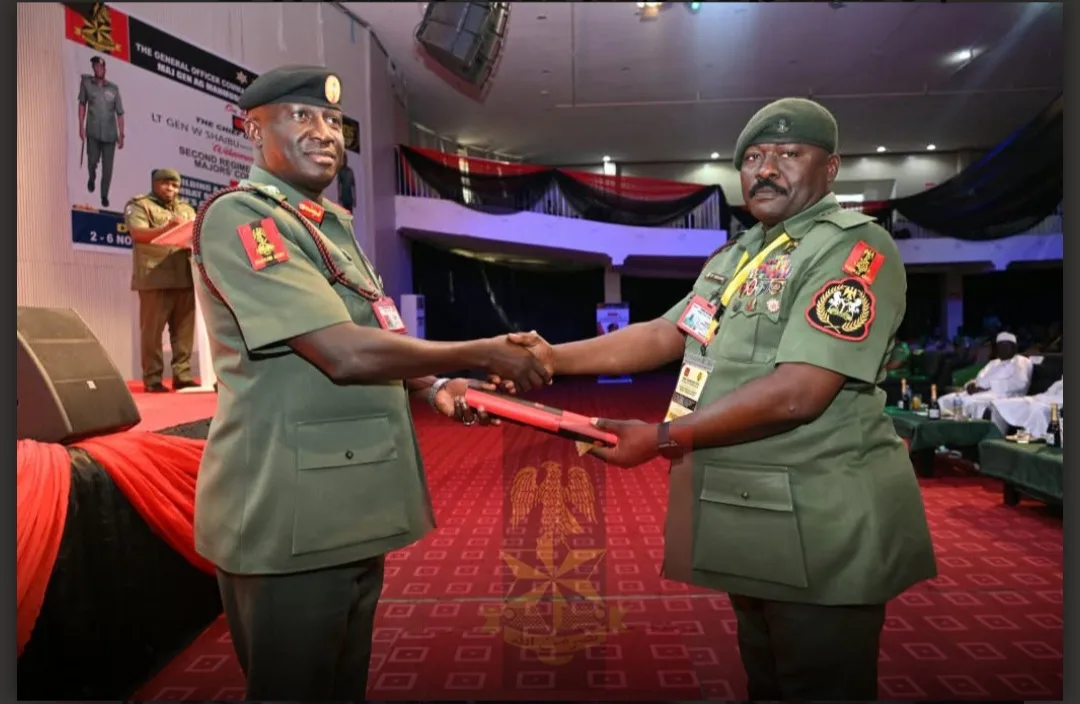
COAS WARNS AGAINST INDISCIPLINE, TASKS ARMY RSMs ON MENTORSHIP AND TROOP EFFECTIVENESS
Emeka Onuigbo2 min read
82 DIVISION DISMISSES ALLEGATIONS OF TROOPS’ HARASSMENT OF OCHON RESIDENTS IN CROSS RIVER
Emeka Onuigbo2 min read
Comments
Comments are moderated. Be respectful. We remove abuse, spam and personal attacks.