



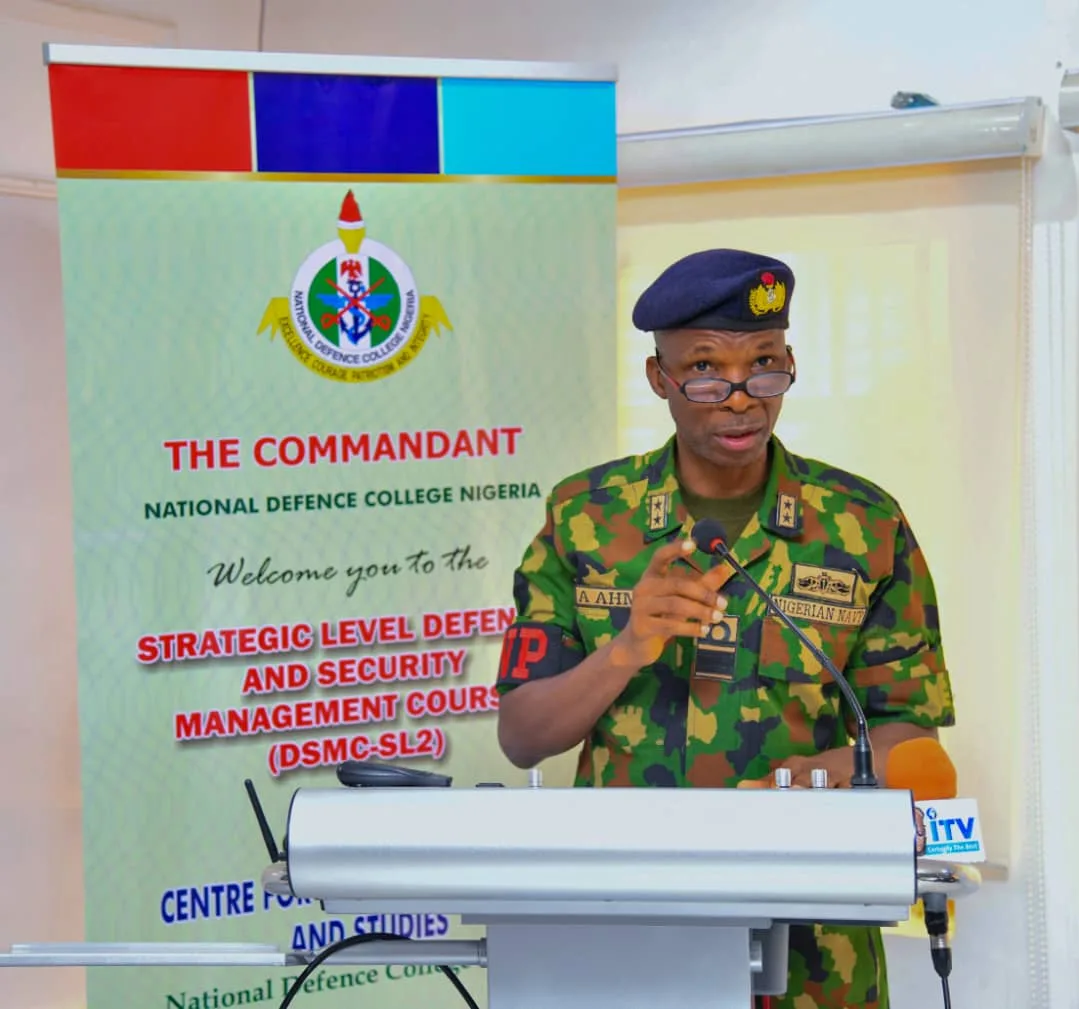
The National Defence College (NDC), Abuja, has commenced the second edition of its Strategic-Level Defence and Security Management Course, an initiative aimed at strengthening inter-agency cooperation and enhancing Nigeria’s capacity to respond effectively to evolving defence and security threats. Declaring the course open, the Commandant of the College, Rear Admiral Abdullahi Ahmed, charged participants to critically examine existing security strategies, share professional experiences and develop innovative, practical solutions to the country’s complex security challenges. Rear Admiral Ahmed emphasised that the professional relationships and networks established during the programme should extend beyond the classroom and translate into stronger institutional collaboration, improved operational effectiveness and tangible security outcomes. He noted that effective responses to contemporary security challenges require a coordinated approach among relevant agencies, supported by strategic thinking, professional expertise and a shared commitment to national security. In his welcome address, the Provost of the Centre for Strategic Research and Studies, Professor A. O. Ahmed, observed that the security environment had become increasingly complex, with terrorist organisations and criminal networks exploiting modern technology and operating across national borders. He stressed the need for security agencies to complement military operations with rigorous research, strategic analysis and appropriate non-military approaches to address the underlying factors driving insecurity. According to him, continuous learning and professional development remain essential to equipping security practitioners with the knowledge, skills and strategic insight required to anticipate emerging threats and develop effective responses. Professor Ahmed further underscored the importance of evidence-based policymaking and institutional collaboration in strengthening national security management.
He further stated that the course brings together senior officers of the Armed Forces of Nigeria, personnel from paramilitary and law enforcement agencies, government officials and other professionals whose responsibilities relate to defence, security and national development adding that it is also designed to strengthen participants’ capacity to formulate and implement effective defence and security policies in an increasingly dynamic national and international environment. "It also provides a platform for exchanging ideas, sharing institutional experiences and building stronger partnerships among security stakeholders". "The programme comes at a time when Nigeria continues to confront a range of security challenges, including insurgency, terrorism and cross-border criminal activities, which demand coordinated responses and sustained cooperation among relevant institutions", he said.
The second edition of the course reinforces the National Defence College’s commitment to improving security governance, promoting strategic-level thinking and building the professional capacity of personnel entrusted with safeguarding national interests. Through structured learning, strategic engagement and inter-agency collaboration, the initiative is expected to contribute to more effective security policies and improved coordination among institutions responsible for maintaining peace and stability. Beyond Nigeria, the course also aligns with the broader need for enhanced security cooperation across the West African sub-region, where transnational threats increasingly require collective action, intelligence sharing and coordinated regional strategies. The programme therefore represents an important step towards developing a more integrated, responsive and forward-looking approach to defence and security management in Nigeria and the wider region.



Comments
Comments are moderated. Be respectful. We remove abuse, spam and personal attacks.